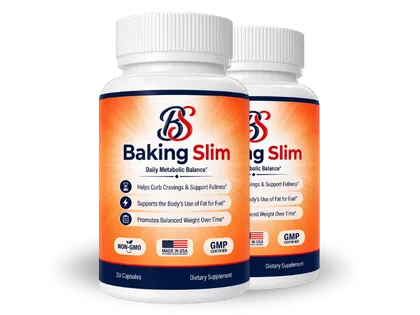
BakingSlim Capsules chromium picolinate is the one ingredient with a stated amount: the seller lists 100 mcg of chromium, as chromium picolinate, per capsule, printed as 286% of the Daily Value1.
Everything else in the capsule sits inside a 510 mg blend with no per-item amounts. So chromium is the only part of the formula you can compare directly with public health guidance. That makes it worth a closer look.
This page covers what chromium is, how 100 mcg compares with what adults need each day, what research says about chromium and weight, and the two medicine cautions that matter most: diabetes medicines and thyroid medicine. We are an independent information site. What follows describes the ingredient, not what BakingSlim will do for you.
01How much chromium is in BakingSlim Capsules?
Each BakingSlim capsule contains 100 mcg of chromium as chromium picolinate, according to the seller's sales page, which prints it as 286% of the Daily Value1.
The seller's directions are one capsule a day with a full glass of water1. At that rate you would take 100 mcg of chromium daily from BakingSlim alone. The figure comes from the seller's page, not from a Supplement Facts panel photo, because no photo of that panel was supplied to this site. If you have a bottle, compare the panel on it with this number.
Chromium picolinate is simply chromium bound to picolinic acid, one of several forms used in supplements. The "mcg" means micrograms, a millionth of a gram. It is a tiny amount by weight, which is normal for a trace mineral.
One capsule a day also means the amount is fixed. You cannot take half the chromium without taking half the blend, because both come in the same capsule. If your doctor thinks 100 mcg is more than you need, the choice is the whole capsule or none of it, not a smaller chromium dose.
02What is chromium, and why is it in BakingSlim Capsules?
Chromium is a trace mineral that may help the body use carbohydrates, fats and proteins, according to the NIH Office of Dietary Supplements2.
Most people get chromium from food. Small amounts are found in many everyday foods, and the body needs only a little. Supplement makers add chromium to blood-sugar and weight-management products because of its link to how the body handles carbohydrate, which is likely why it appears in BakingSlim.
The seller does not explain its reasons for choosing chromium or this amount. We can say what public sources report about the mineral itself. We cannot say how it acts inside this particular formula, alongside eight botanicals whose amounts are unknown. For the full list, see the ingredients page.
03How does 100 mcg of chromium compare with daily needs?
The 100 mcg in one BakingSlim capsule is about 2.9 times the 35 mcg Daily Value, and above the adequate intake for every adult group the ODS lists.
| Group | Adequate intake per day | 100 mcg as a multiple |
|---|---|---|
| Men 19 to 50 | 35 mcg | About 2.9 times |
| Women 19 to 50 | 25 mcg | 4 times |
| Men 51 and older | 30 mcg | About 3.3 times |
| Women 51 and older | 20 mcg | 5 times |
The adequate intake figures come from the ODS chromium fact sheet2. The multiples are our own arithmetic. The 286% printed by the seller uses the 35 mcg Daily Value: 100 divided by 35 is about 2.86, so the seller's figure is consistent1.
An adequate intake is the amount thought to meet most people's needs. It is not a ceiling and not a goal to exceed. Food already supplies some chromium, so a supplement adds to what you get from meals.
04What does research say about chromium and weight?
Research suggests chromium might produce only a very small loss of weight and body fat, according to the ODS fact sheet on weight-loss supplements3.
"Very small" is the source's own framing, and it is worth taking at face value. The studies looked at chromium alone, at their own doses, in their own groups of people. They were not studies of BakingSlim. The same fact sheet says that, overall, there is little scientific evidence that weight-loss supplements work, and that makers rarely test their products in people3.
So the chromium research tells you what has been seen with the mineral in general. It says nothing about what BakingSlim will do for you. The other ingredients do not change that picture, since their amounts are not disclosed and the blend as a whole has not been studied, as far as we could find. The how it works page covers the formula more broadly.
05Is the chromium in BakingSlim Capsules a concern if you have diabetes?
Yes, ask first: chromium taken with insulin or other diabetes medicines might cause low blood sugar, and the American Diabetes Association does not recommend chromium supplements for people with diabetes2.
The ODS reports that chromium supplements have shown mixed results for blood sugar in type 2 diabetes2. Some studies saw a change and others did not. Mixed results plus a medicine interaction is a clear reason to talk to your doctor or pharmacist before you start.
BakingSlim also lists berberine and banaba in its blend, two botanicals that have been looked at for blood-sugar effects. Together with chromium, that makes three ingredients worth raising with whoever manages your diabetes care. The seller's own page asks buyers to check with a physician, especially if they take medicine for blood sugar1.
Never change or stop a diabetes medicine on your own to make room for a supplement. Our medications page sets out the wider list of interactions.
06Can chromium in BakingSlim Capsules affect thyroid medicine?
Chromium might reduce how much levothyroxine, a common thyroid medicine, your body absorbs, according to the ODS chromium fact sheet2.
If you take levothyroxine or any other thyroid medicine, show the BakingSlim ingredient list to your pharmacist before you begin. Ask whether the supplement could affect your medicine and what, if anything, you should do about it. Your pharmacist knows your full medicine list and can give advice that fits it.
The same habit helps with other medicines too. Chromium is only one of the names on the BakingSlim list, and several blend items have their own interaction flags. Bringing the whole list, rather than one ingredient, gives your pharmacist the full picture in one visit.
Do not adjust the timing or dose of a thyroid medicine yourself. Small changes in how levothyroxine is absorbed can matter, and only your prescriber should decide on any change.
07Is 100 mcg of chromium a day safe?
The ODS fact sheet on weight-loss supplements describes 20 to 45 mcg of chromium a day as safe, and notes that larger amounts can cause watery stools, headache and nausea3.
BakingSlim's stated 100 mcg is above that 20 to 45 mcg range. That does not mean harm is certain, but it is a fair point to raise with your doctor or pharmacist, especially if you already take other products. Chromium turns up in several places:
- Daily multivitamins and multiminerals
- Other weight-management or blood-sugar supplements
- Some meal-replacement shakes and bars
- Food, in small amounts
Add up the chromium on each label you use. If the total is well above what you expected, ask whether you need all of it. If you use diabetes medicine, ask your doctor which signs of low blood sugar to watch for. Stop taking the capsules and get medical help for chest pain, a racing heartbeat, fainting, yellow skin or eyes, or dark urine. The side effects page covers other ingredients too.
08What should you ask about BakingSlim Capsules chromium before you start?
Before you start BakingSlim Capsules, confirm the chromium amount on the bottle and check it against your health and your other products with a pharmacist.
- Ask the order desk for a photo of the Supplement Facts panel to confirm the 100 mcg figure.
- List every supplement you take and add up the chromium in each.
- Tell your pharmacist if you take insulin, other diabetes medicine or levothyroxine.
- Mention the berberine and banaba in the blend as well.
- Agree on what signs should make you stop and call.
These steps take a few minutes and give you a real answer for your own situation, which no product page can do. Write down what your pharmacist says, along with the date, so you can look back at it if your medicines change later. For more on safety overall, see the safety page.
Safety: BakingSlim is for adults 18 and over. The seller says it is not for pregnant or nursing women. It lists bitter orange and green tea extract, which are stimulant-type botanicals, plus ingredients that can interact with medicines. If you have a heart, blood-pressure, liver or blood-sugar condition, or take any medicine, ask your doctor or pharmacist before use. Never change a prescribed medicine on your own. Stop and get medical help if you have chest pain, a racing heartbeat, fainting, or yellow skin or eyes.
Frequently asked questions
How much is the chromium 100 mcg in BakingSlim Capsules compared with my needs?
It is about 2.9 times the 35 mcg Daily Value and above the adequate intake for every adult group. Women 51 and older need about 20 mcg a day, so 100 mcg is five times that.
Is the BakingSlim Capsules chromium dose above the safe range?
The ODS fact sheet on weight-loss supplements calls 20 to 45 mcg a day safe, and BakingSlim lists 100 mcg. Larger amounts can cause watery stools, headache and nausea, so ask your pharmacist.
Why do BakingSlim Capsules list 286 percent of the Daily Value for chromium?
The Daily Value for chromium is 35 mcg, and 100 divided by 35 is about 2.86. The seller's 286% figure matches that arithmetic.
What are the BakingSlim Capsules chromium safety cautions with medicines?
Chromium might cause low blood sugar with insulin or other diabetes medicines, and might reduce levothyroxine absorption. Talk to your pharmacist before starting.
Should I take BakingSlim Capsules chromium if I have diabetes?
Ask your doctor first. The American Diabetes Association does not recommend chromium supplements for people with diabetes, and the blend also lists berberine and banaba.